Contents
What is the Solution-Focused Team Meeting Method ?
In schools, when issues such as truancy or bullying arise among children or within a class, teachers hold meetings to discuss and devise strategies to address these problems. As issues are already present, it is desirable to identify solutions and provide help as swiftly as possible. However, often meetings can remain inconclusive or overly focus on the causes of the problems."The Solution-Focused Team Meeting Method (SFTMM)" was developed to address the challenges occurring at schools and rapidly clarify support measures. It was developed by Setsuko Sato—a former professor at Yamagata University's Graduate School of Education—in 2009 as part of her lectures on “Counseling” and “Facilitation.” It was presented in a paper in 2012 and compiled into a book in 2021.
In this book, Sato reflects on the negative perceptions of many teachers about previous meetings, which she referred to as “gripe sessions where nothing gets decided.” She summarizes them as follows:
- “Lack of time”:Teachers are overwhelmed with teaching, supervising club activities, and other meetings, leaving no time for educational consultations.
- Tendency to defer issues by taking the escape route of “let's wait and see,” leading to problems being postponed.
- Inability to escape the “cause-finding and culprit-searching” trap: Even if new problems arise, what needs to be discussed becomes ambiguous.
- Expectation that “others will change”: Meetings often focus on hoping others will change, with the thinking “if only that person would change.”
This led to the development of the SFTMM. By using this method, in merely 30 minutes, everyone can come together to discuss and decide on the next steps. Sato refers to this as an “exciting, team-driven meeting.” The following elements typically emerge during these meetings:
- Members listen to and acknowledge each other.
- They engage in collaborative thinking within an open environment.
- The facilitator manages the meeting’s progress, prioritizing time, goals, and rules.
- Change is seen as a valuable resource, ensuring successful approaches are not overlooked.
- The short 30-minute timeframe enables a focused and productive meeting.
Basic Concepts of the SFTMM
The SFTMM is built on two key concepts: the solution-focused approach and facilitation.Solution-focused approach
The first concept, the “solution-focused approach,” is based on the following core philosophy (Berg, 1994):- Do not change what is working.
- Continue doing what has worked, even if only once.
- If something is not working, try something different.
Facilitation
The second concept, “facilitation,” involves promoting intellectual interaction within a group (Hori, 2004). In team meetings, the facilitator plays a crucial role in ensuring the smooth progression of the meeting. The facilitator’s roles include:- Leading the meeting, summarizing final opinions, and facilitating the sharing of these opinions among all participants.
- Bringing participants together, initiating the meeting, and managing time and progress.
- Providing new perspectives to facilitate further discussion when questions or opinions run dry.
How to Conduct the SFTMM
Preparing the space for the meeting
Items Needed for the Meeting
- Whiteboard
- Whiteboard markers (black, blue, red)
- Chairs for each participant
- Camera, clock (a smartphone is also acceptable)
- For case presenters, relevant materials (such as pictures, homework, data)
How to Proceed: Nine Steps
Once the preparation is complete, the meeting can commence. The meeting will progress in nine steps, adhering to the time guidelines for each.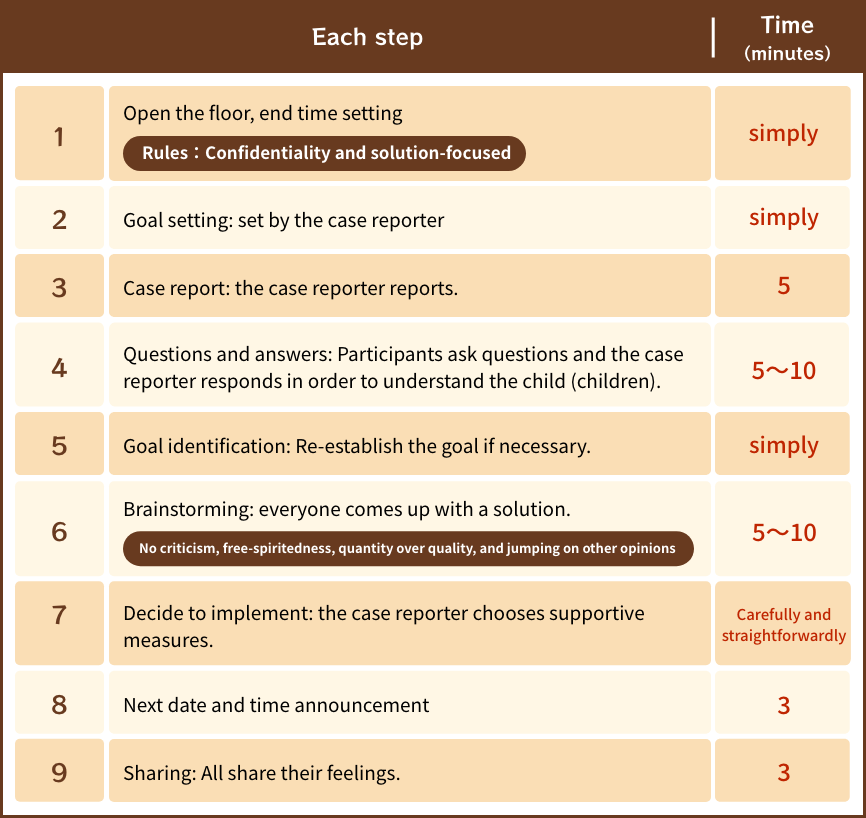
Table 1: Nine basic steps and time schedule of the SFTMM
For a more detailed guide on how to proceed, refer to Sato's (2021) book “The Solution-Focused Team Meeting Method: Educational Consultations Leading to the Future (Toshobunka).”
Suggested Books
For a live demonstration of the SFTMM, refer to the videos available on this website.
The video is available on this page
Layout on the Whiteboard
This is an example of discussing a case study from Sato’s book and noting it on the whiteboard. While the placement of each step's content is generally standardized, the specific location and amount of notation may slightly vary depending on the case being discussed. Those interested are encouraged to compare this with the case studies shown in the videos posted on this Website.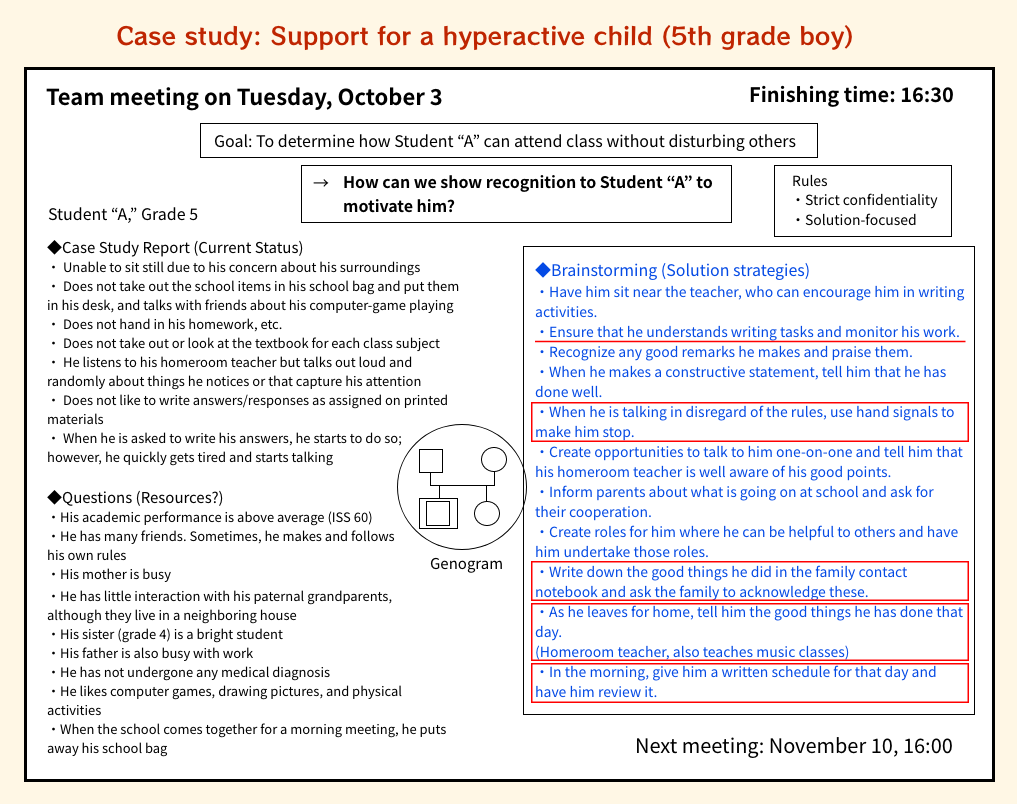
Figure 1:Recommended layout on the whiteboard in the SFTMM
Created by the author based on pp. 28-29 on Sato (2021)
The SFTMM: Developer’s Vision
It is expected that the SFTMM will swiftly produce solutions, enabling prompt action and support, which will help both teachers and students become more energized and positive.Finally, in the SFTMM, the case presenters themselves decide on the support measures to be implemented. While it is crucial to decide "what actions to take." I believe the developer intended that the teachers who provide the case studies should achieve autonomy by making "decisions independently” with the assistance of peers.
References
- Berg, I.K. (1994). Family Based Services: A Solution-Focused Approach, New York: W.W. Norton & Company.
- Hori, K. (2004). Fashiritation Nyu-mon [Introduction to Facilitation] (in Japanese). Tokyo: Nikkei.
- Sato, S. (2012). “Gakko niokeru Kohkatekina Ke-sukaigi no Arikata nitsuite: ‘Howaitobo-do Kyoikusohdan’ no Kokoromi” [On the way of effective case conference in schools: A trial of ‘white board educational consultation] (in Japanese), Annual Report of the Graduate School of Educational Practice, Yamagata University, No.3, pp. 23-30.
- Sato, S. (2021). Howaito bo-do de Dekiru Kaiketsushiko no Chi-mu Kaigi: Mirai ni Tsunagaru Kyoiku Soudan [The Solution-Focused Team Meeting Method with a Whiteboard: Educational Counseling for the Future] (in Japanese). Tokyo: Toshobunka.